ISO certificate · Environmental management
ISO 14001:2026: What’s changing?
What is ISO 14001 certification?
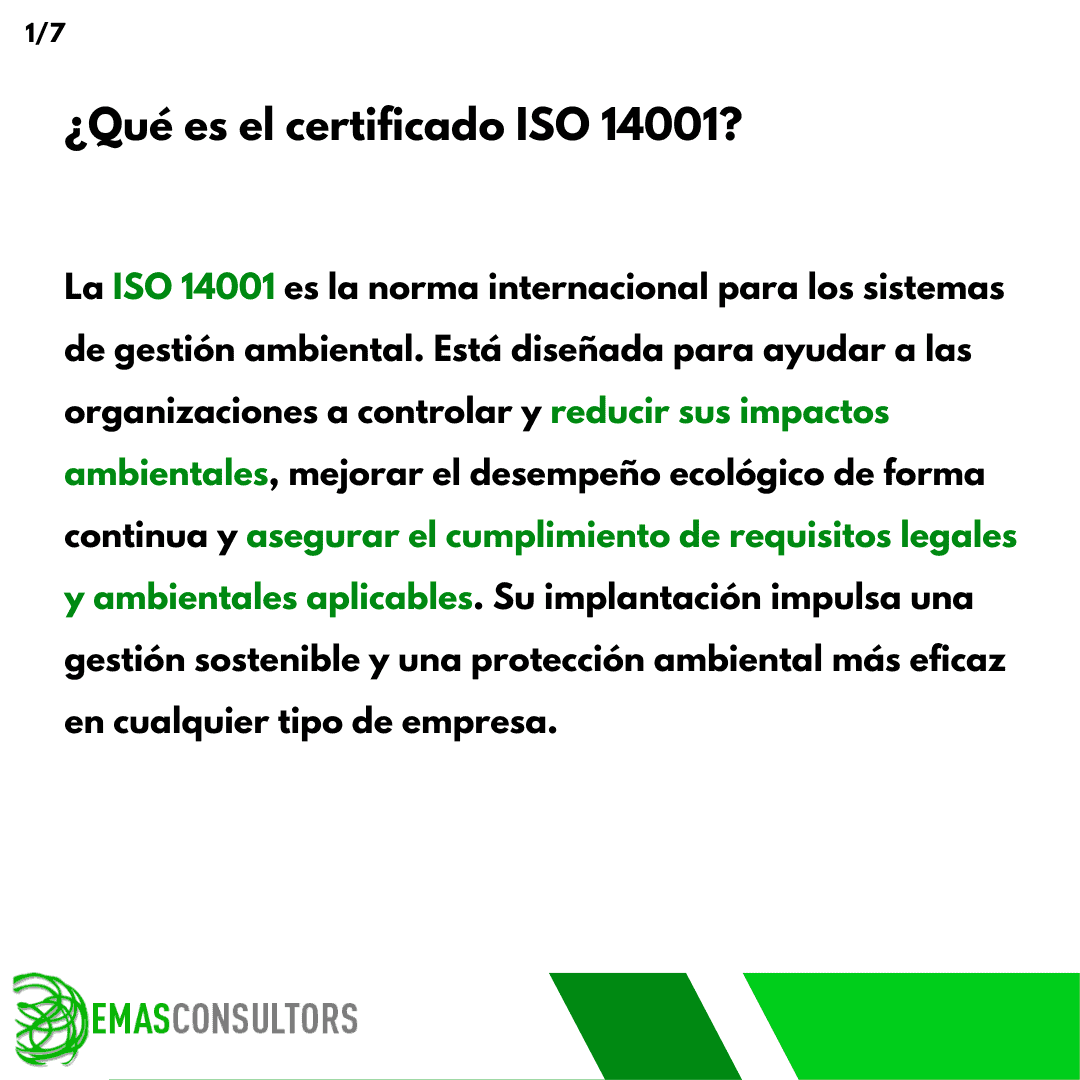
ISO 14001 is the international standard for environmental management systems. It is designed to help organisations control and reduce their environmental impacts, continually improve environmental performance and ensure compliance with applicable legal and environmental requirements. Implementing it promotes sustainable management and more effective environmental protection in any type of business.
Key changes in ISO 14001:2026
To help you adapt to the new standard, we summarise the main points of ISO 14001:2026 that will affect your business’s environmental management:
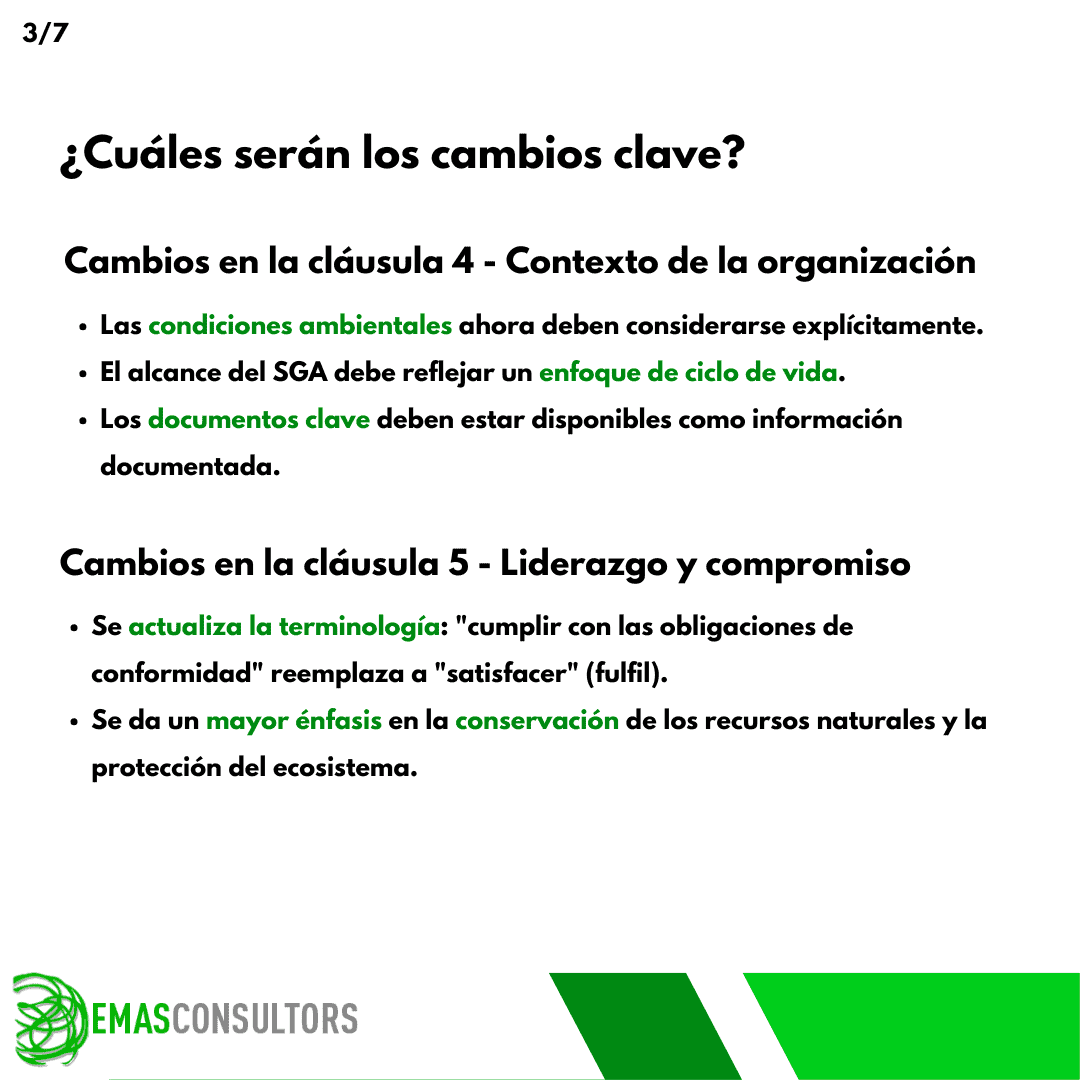
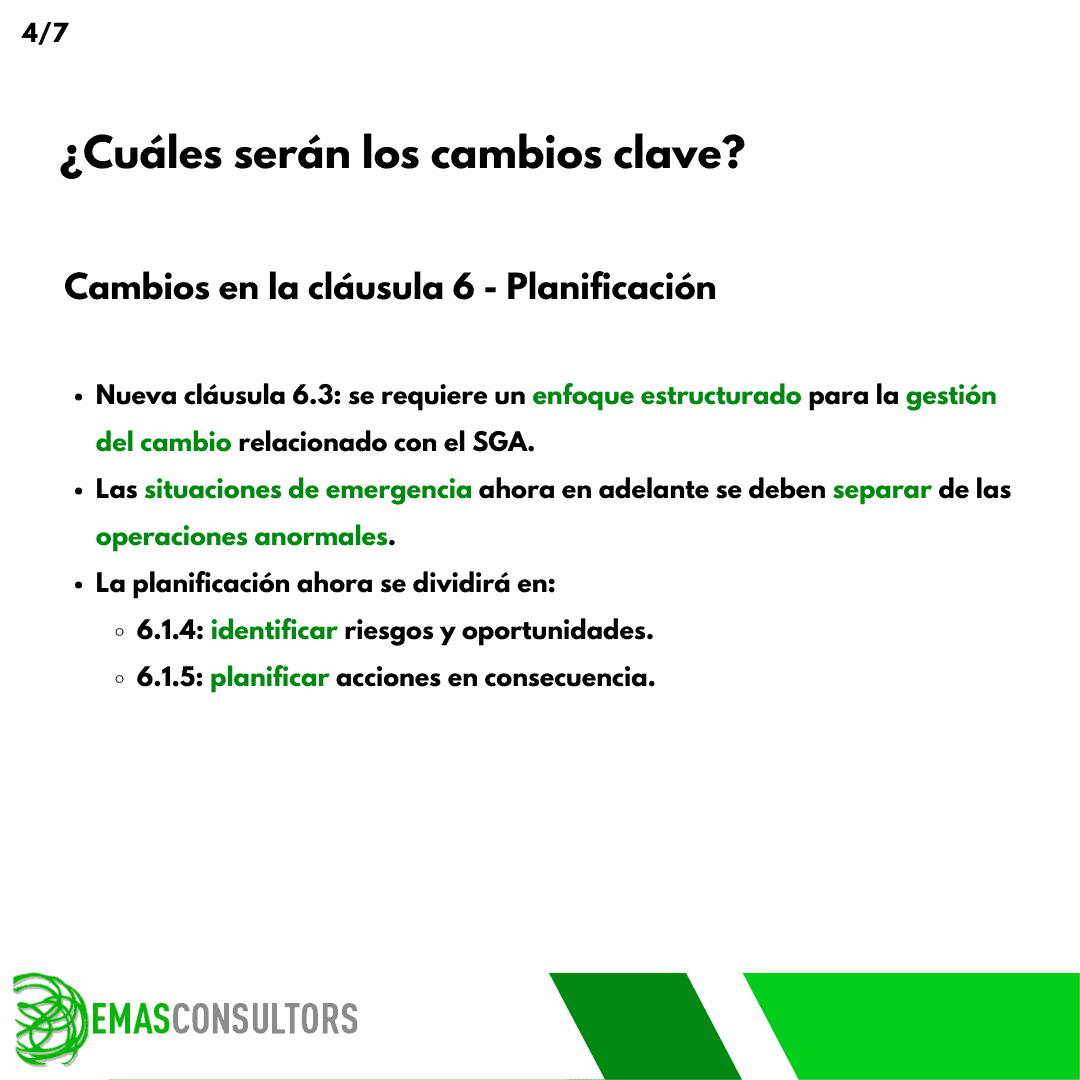
Context of the organisation – Clause 4
This transforms the context of the organisation by requiring climate action and environmental resilience to be integrated. The change to clause 4 requires a deeper strategic analysis to identify external risks, ensuring that the environmental management system aligns with new global sustainability standards.
Leadership and commitment – Clause 5
The revision to clause 5 of ISO 14001 strengthens the role of leadership and commitment in environmental management. Top management must go beyond supervision to ensure that environmental policy is fully integrated into the business strategy, promoting a corporate culture focused on sustainability.
Planning – Clause 6
Clause 6 of the new ISO 14001 prioritises strategic planning to address risks and opportunities arising from climate change. Organisations must set more ambitious, quantifiable environmental objectives and integrate a life cycle perspective to anticipate impacts and ensure regulatory compliance in a demanding global environment.
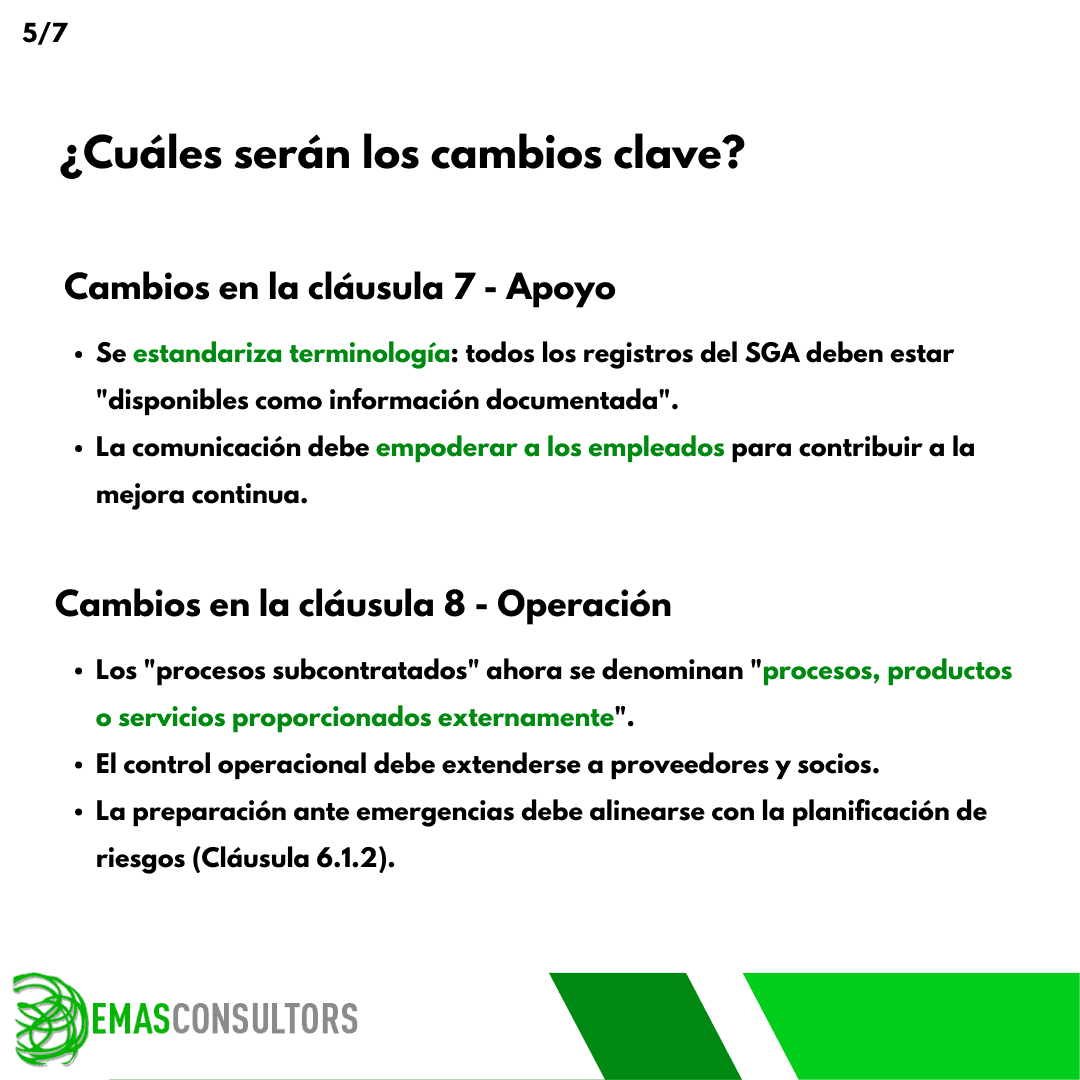
Support – Clause 7
Clause 7 focuses on the support needed for the system to succeed, highlighting staff competence and awareness. The new version updates the management of documented information, requiring more transparent internal and external communication about environmental performance and commitment to sustainability.
Operation – Clause 8
Clause 8 of ISO 14001 is evolving to ensure more rigorous operational control from a life cycle perspective. Businesses must strengthen the management of external processes and emergency preparedness, ensuring that every operational stage minimises environmental impacts and meets the defined sustainability criteria.
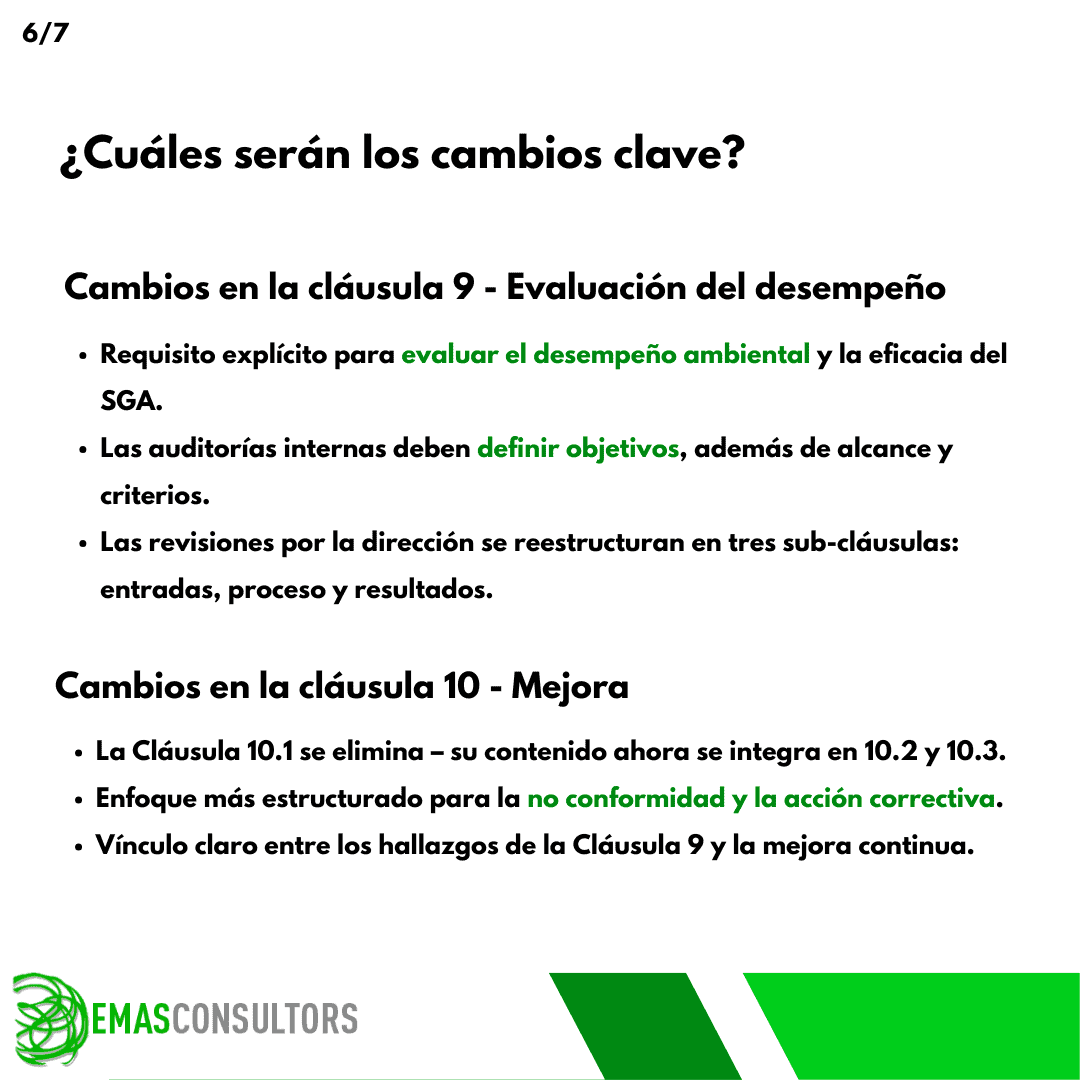
Performance evaluation – Clause 9
Improvement – Clause 10
Which other standards will change?
ISO 9001 – Quality management (new version planned for 2026)
ISO 45001 – Occupational health and safety (revision under way)
The update to ISO 45001 will include improvements in risk management, a culture of prevention, worker participation and contractor control. There will be a stronger focus on workplace wellbeing, psychosocial factors and safety leadership. Businesses will need to review procedures, risk assessments and internal participation.
ISO 14064 – Carbon footprint (greenhouse gases)
The next edition will update quantification methodologies, the life cycle approach, scope 1–2–3 emissions calculations and verification requirements. It will align more closely with international standards (GHG Protocol and SBTi). Businesses will need to adjust inventories, organisational boundaries and supporting data evidence to check consistency with GHG reports.
ISO 50001 – Energy management (planned revision)
The next version of ISO 50001 will strengthen advanced energy measurement, data digitalisation, integration with ISO 14001 and criteria for demonstrating improvements in energy performance. There will be changes to energy reviews, baselines, EnPI indicators and technical documentation. Energy-intensive sectors will be affected.
ISO 22301 – Business continuity (scheduled revision)
The revision of ISO 22301 will place greater emphasis on organisational resilience, cyber incidents, digital recovery and management of critical suppliers. Changes are expected to the BIA, risk analysis, RTO/RPO time objectives and continuity strategy. Plans, matrices and exercises will need updating, particularly in technology sectors.
ISO/IEC 27001 – Information security (planned adjustment)
ISO 27001 certification will receive a minor update to align with changes to ISO 27002: new controls, better implementation guidance and adjustments to documentation and risk assessment requirements. It will not be a full revision, but it will be a significant change for audits.
ISO 37001 – Anti-bribery management systems (active revision)
ISO 37001 certification will receive an update strengthening due diligence, supplier integrity controls and documentary evidence. It will align with global compliance trends, including criminal-law compliance and anti-corruption. Organisations will need to improve risk assessments and internal policies.
ISO 20000 – IT service management (revision under way)
ISO 20000 certification is being modernised to accommodate cloud environments, managed services, automation and DevOps models. It will include new requirements for SLAs, incidents, agile changes and technical competence, directly affecting IT businesses and technical support.